
2026-08-07
ZTE corp used MWC Shanghai 2026 to present a clear view of how companies can unlock value while operating in an increasingly uncertain AI era. During the event, Cui Li, Chief Development Officer of ZTE, delivered a keynote speech titled Unlocking Value and Embracing Uncertainty in the AI Era, highlighting how AI is changing industry logic, product design, and organizational evolution.
The keynote placed AI at the center of future value creation. Rather than treating AI as a single technology layer, the company described it as a force that is reshaping products, solutions, operations, and collaboration models. This approach reflects the rapid transition from conversational AI toward agentic AI and embodied AI.
Uncertainty Becomes a Strategic Reality
Cui Li noted that uncertainty is becoming the only certainty in the AI era. From a global perspective, industries are facing both AI revolution and energy transition, while the competitive logic is shifting from efficiency alone to a combination of efficiency and resilience.
Technology cycles are also becoming shorter. Large AI models may evolve monthly or weekly, while major capability improvements can appear within six months. At the same time, hardware innovation continues to accelerate as new chip architectures and flagship products reshape computing supply and inference cost structures.
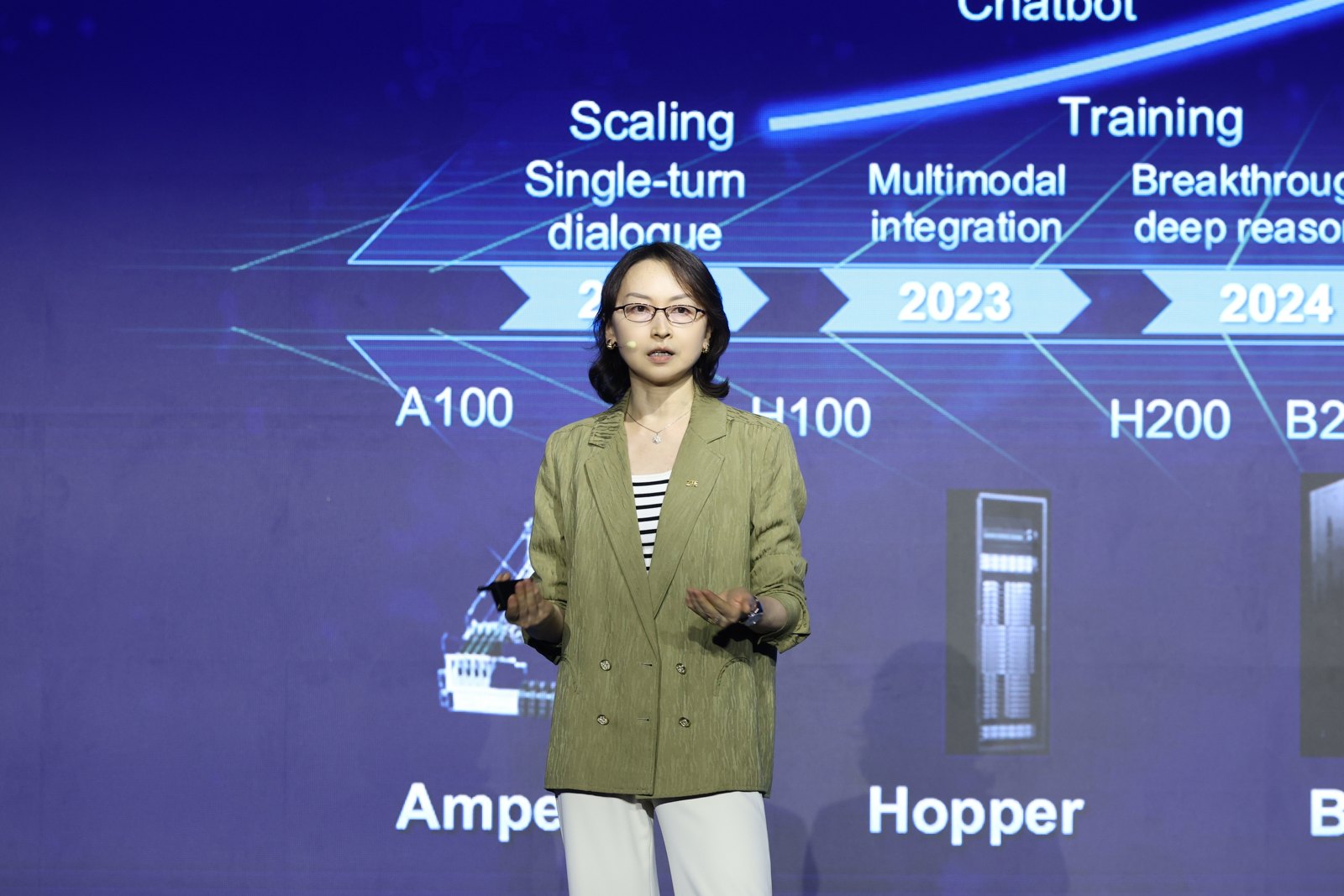
This faster pace creates opportunities, but it also raises the difficulty of choosing technology roadmaps, updating assets, and aligning talent capabilities. Companies need systems that can evolve quickly without being locked into a single architecture or business model.
All in AI, AI for All
Against this background, ZTE advanced its All in AI, AI for All strategy. The strategy aims to embed AI-native capabilities deeply into products and solutions so that intelligence can become part of value delivery rather than a separate add-on.
The strategy also includes organizational change. The company emphasized the need to evolve toward a data-driven organization that features human-machine collaboration. In practice, this means using AI to improve workflows, decision-making, efficiency, and responsiveness across different business scenarios.
Building a Resilient AI System
To address uncertainty, ZTE described four key dimensions for building a resilient AI system: openness and decoupling, flexible scaling, extreme synergy, and scenarios first. These dimensions are designed to help technology systems respond to fast changes in model capability, computing demand, and market requirements.
Openness and decoupling allow enterprises to avoid excessive dependence on a single technology path. Flexible scaling supports dynamic resource allocation as AI workloads change. Extreme synergy helps connect computing, networks, devices, software, and scenarios into a more efficient system. A scenarios-first approach keeps technology development tied to practical value.
Together, these four dimensions create a framework for long-term adaptability. In a market where model capabilities, hardware supply, energy requirements, and user expectations can all change quickly, resilience becomes a practical operating capability rather than an abstract management principle.
Market Segmentation Drives New Demand
The keynote also highlighted how AI is accelerating market segmentation. On the consumer side, personalized recommendation algorithms are increasing long-tail demand. In production, flexible manufacturing and AI quality inspection are supporting small-order and fast-supply models.
This change makes the one-size-fits-all model less effective. As emotional economy, experience economy, and specialized markets continue to expand, companies need more adaptive products and services. AI becomes valuable not only because it automates processes, but because it helps organizations respond to differentiated needs with greater precision.
For technology providers, segmentation also changes the way solutions are designed. Products must be modular enough to adapt to different industries, yet integrated enough to deliver stable performance. This is why AI-native design, open architecture, and scenario-based deployment are becoming central to enterprise transformation.
Toward Human-AI Symbiosis
Looking ahead, ZTE described a future of human-AI symbiosis. In this view, AI should not replace human creativity or judgment. Instead, it should help people and organizations handle complexity, improve efficiency, and create new forms of value across industries.
The company positioned itself as a value contributor in the AI ecosystem, emphasizing continuous innovation and cooperation with global partners. This cooperative stance is important because AI value depends on the combined development of chips, models, terminals, networks, platforms, and application scenarios.
Conclusion
The MWC Shanghai 2026 keynote showed how ZTE corp is framing AI as both a strategic opportunity and a management challenge. By focusing on AI-native capabilities, organizational agility, and resilient systems, the company is preparing for an environment where uncertainty is constant and value creation depends on adaptability.
As AI continues moving from experimentation into industrial deployment, enterprises will need open architectures, flexible scaling, and practical scenario alignment. ZTE's strategy provides a structured way to understand that shift and to support the next stage of intelligent transformation.
The message from the keynote is therefore not only about adopting AI faster. It is about building products, organizations, and partner ecosystems that can absorb change, create value from uncertainty, and keep improving as the AI era moves from isolated tools toward human-AI symbiosis.
- Company:ZTE
- Contact Person:Leo
- Email:365498883@qq.com
- Website:https://www.zte.com.cn/global/index.html
- Country:China
- City:Shenzhen
